

Like other tools, the conveyor belt vulcanizing machine may encounter some minor issues during use. These problems can be caused by improper usage or inadequate storage, but they can be resolved immediately without affecting the normal operation of the machine.
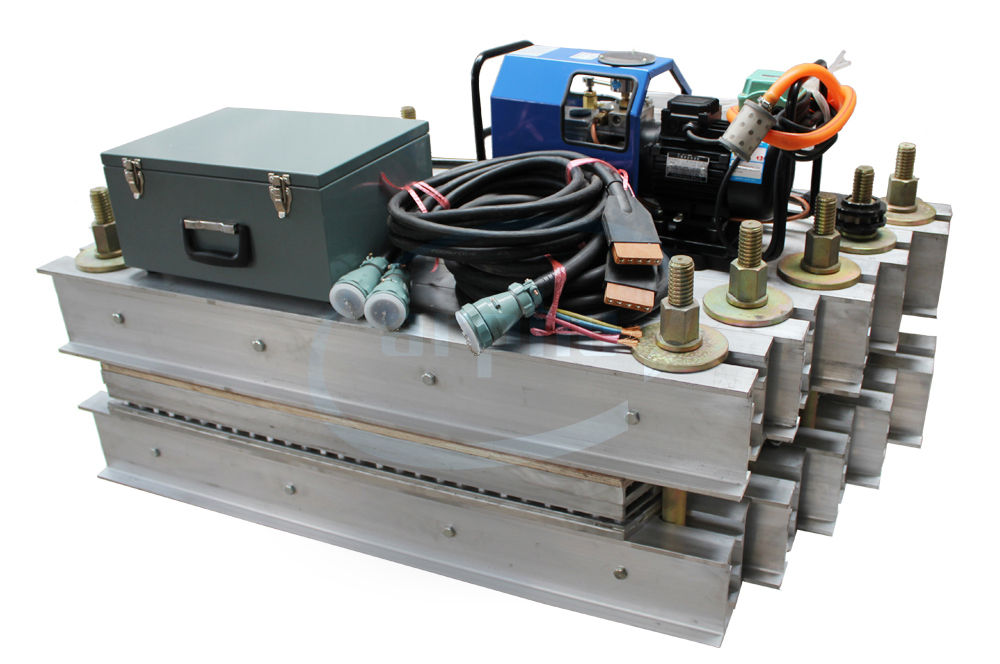
Common Problem 1: The heating process takes longer or the temperature cannot reach 145℃. If you encounter the above problems, follow these steps to check:
(1) Check if a wooden heat insulation plate is placed between the heating plate and the frame. If the insulation plate is not placed or lost, install it before conducting the temperature rise check.
(2) If the temperature cannot rise, check if the sulfurization time switch in the upper left corner of the control box is turned on. If it is turned on, the belt vulcanizing machine has entered the insulation stage, and the temperature naturally cannot rise.
(3) If the above two conditions are normal but the temperature still cannot rise, check if the insulation board is damp. If the insulation board becomes damp due to water exposure, it needs to be dried with the heating plate before the temperature can reach the required level.
(4) If the temperature still cannot rise after the above checks, contact the manufacturer for further technical consultation or return the machine for repair.
Common Problem 2: During heating, the temperature of the heating plate is uneven, causing partial joints to fail to bond tightly.
Follow these steps to check:
(1) Check if the insulation plate is damaged. Damaged insulation board is a major cause of uneven heating temperature.
(2) If the insulation board is intact, individually heat the heating plate and use a thermometer to measure the temperature at different parts of the plate. If any issues arise, it is possible that the internal heating element is damaged. Contact the manufacturer for replacement or repair of the heating element.
Common Problem 3: When using the manual pump for increasing pressure, the pressure does not increase. Follow these steps to check:
(1) Check if the water inlet of the water pressure plate is being pressed due to the tightness of the frame bolts. If this is the case, loosen the bolts slightly.
(2) Check if the manual pump has any air leaks or loose connections, and tighten them. Also, check if the gasket of the water pressure pump is damaged.
Common Problem 4: Some users may experience the phenomenon of the belt sticking to the heating plate after vulcanization. This issue occurs because users fail to follow the operation requirements and place paper or talcum powder as isolating materials between the upper and lower heating plates. Direct contact between the heating plate and the conveyor belt causes this problem. To resolve this issue, simply clean the heating plate. Strictly follow the operating procedures in the next use to prevent it from happening again.
Common Problem 5: Improper storage or accidental impacts during use may cause water leakage in the water pressure plate. Follow these steps to check:
(1) Identify the location of the leakage, whether it is on the surface of the water pressure plate or the contact area between the surrounding rubber and the bottom plate of the water pressure plate. If the leakage is from the surrounding gaps, tighten all the surrounding screws in order.
(2) If the leakage is on the surface of the rubber of the water pressure plate and appears as needle-like leaks, you can temporarily repair it with adhesive such as 520 glue. However, after the temporary repair, the panel must be replaced.
(3) In case of severe leakage, the water pressure plate cannot be used and must be replaced.